Thursday, April 1, 2010

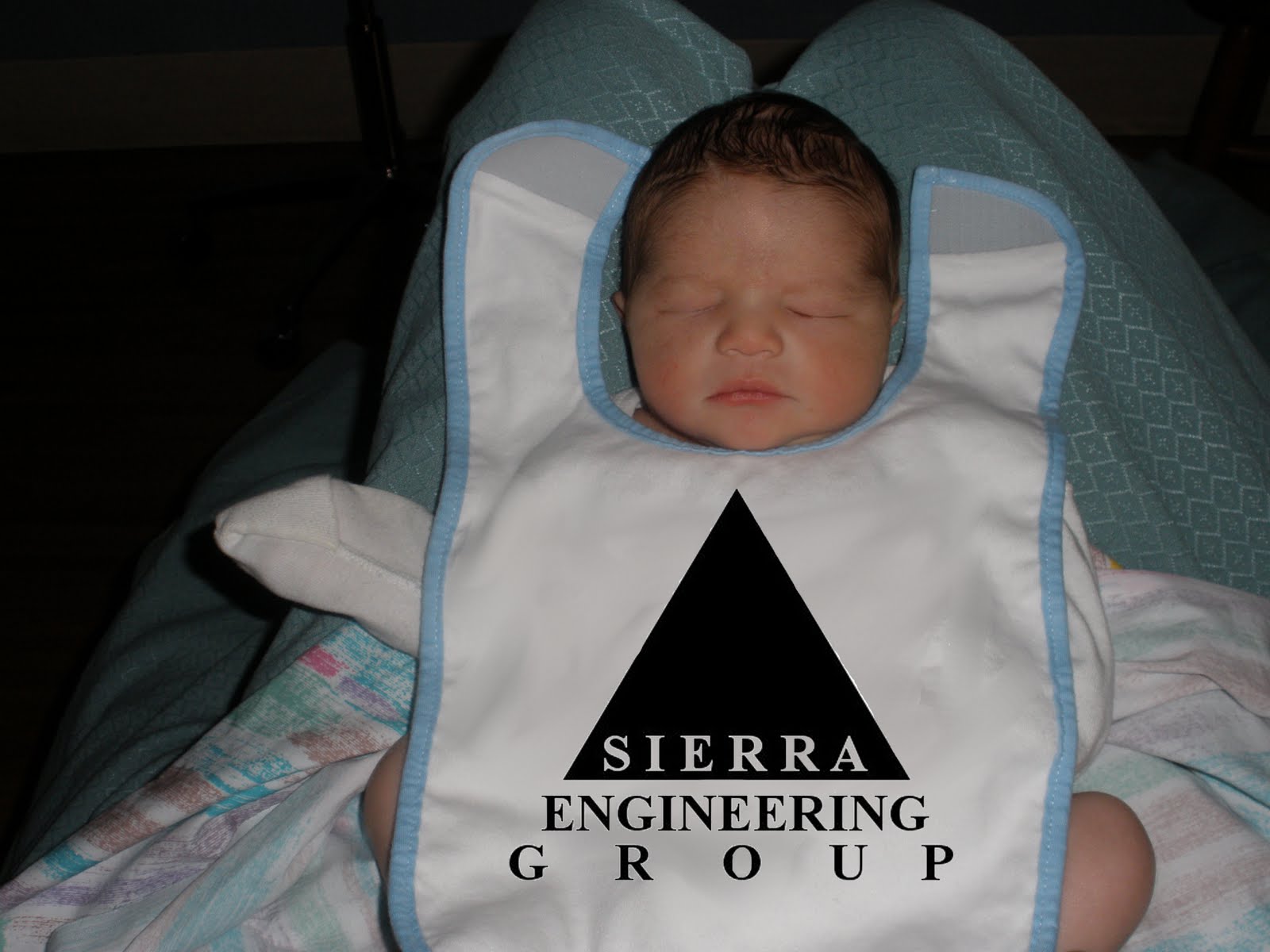
Sierra Engineering Group welcomes a future engineer!

The SEG family is thrilled to welcome Nicolas Matteo Cozzitorto, brand new son of Frank and Patricia! Nicolas was born happy and healthy on Friday, March 26, exactly one week ahead of schedule. (And yes, we now expect Frank to meet ALL project ‘deliveries’ a week early!) Here are some photos from the office baby shower and Nicolas.


Posted by Sara Dunaway

Wednesday, March 24, 2010

101 Forest Nears Completion

Sierra Engineering Group served as the structural engineer of record for this office building designed by The Hayes Group Architects, located on the corner of Forest and Alma in downtown Palo Alto.

The structural system consists of a combination concentric braced frames and CMU shear walls in one direction and Special Moment Resisting Steel Frames in the other direction. The L-shaped building also required a seismic joint to separate the more flexible moment frame side of the structure from the more rigid CMU shear wall side. The Hayes Group design expresses the structural elements throughout the building, even exposing the exterior pipe columns along the Alma street elevation. As structural engineers we admit our bias to such systems as opposed to others where our work is hidden behind finishes. In a case like this our work not only has to address the structural requirements but the solutions also have to be particularly sensitive to their visible aesthetic impact. This would not have been successful were it not for a true collaboration between architect and structural engineer.

An intriguing blend of finish materials along with the large glass expanses create a uniquely distinct building with spacious, light interiors which should appeal to a wide range of potential tenants. We are very proud to have been a part of this process. The building is scheduled for completion in the next couple of months.

Posted by Jesus Sierra, S.E.


Sunday, March 14, 2010

Haiti: A Call To Arms for the Engineering Community

Fear lurks in the obscure. It resides in the shadows. This is why we call upon the police to solve crimes. This is why we call on doctors to identify our ills. This is why we call upon engineers to explain building failures. We look to shine the light on the cause so that we can fight fear with knowledge. With knowledge we can possibly prevent it all from happening again.

In a place like Haiti, that endured a devastating earthquake that killed in the order of 200,000 people, we need to understand the reasons behind such widespread structural collapse. Haiti is one of, if not the, poorest country in the world. Infrastructure is non-existent. It has a system of government so corrupt that it lacks the ability or the will to enforce any sort of building standards. The process of instituting and enforcing building policies takes money, which Haiti lacks. Consequently, the approach needs to be more deliberate, more realistic and able to account for the true life conditions for the majority of the population in Haiti itself.

It would be easy to, for example, write up code requirements for enforcing material qualities; cement mixes to be tested and approved or for reinforcing steel to be installed in block walls and grouted properly or for roofs to be properly anchored, for foundations to be to be placed without debris in the excavations and for them to be properly dimensioned. But too many of the dwellings there are built without guidance, or proper supervision. They are built outside any potential enforceable safeguards.

Suggested solutions have included providing container housing or prefabricated homes. Both of those are ways to create business for the companies providing them under the guises of goodwill. Although it may assuage the immediate housing problem, these solutions ignore the long-term sustainability of Haitian society. The companies that produce them will make money, Haitians get temporary housing, but the Band-Aid does not stop the root cause, it merely masks it.

We need to approach this with the knowledge that the realities on the ground in Haiti are not going to change overnight. Government will not avoid blatant corruption. People will not place trust in a system that has failed them time and again. People trust only themselves and will do what they must to survive on their own. They will build using the limited resources that they have available. This is where building policy and the responsibility of the engineers must begin. This is where our volunteer efforts must start.

Think about all those contests and class assignments we had in engineering school: building bridges out of toothpicks, canoes out of concrete, dropping an egg from a rooftop and coming up with a way to keep it from breaking using limited materials. We need to think like Robinson Crusoe when we contemplate rebuilding in Haiti and imagine utilizing only those materials accessible to the poor majority, with rudimentary tools and limited craftsmanship. We must dedicate ourselves to coming up with ideas that we can offer people in Haiti, about how they can construct safer dwellings- simply and economically. With a bit of creative thinking and will, we can, as a community, provide them the proper guidance.

One possible solution is to distribute easy-to-understand instructions that the average Haitian citizen can follow to create simple dwellings. The makeshift structures destroyed in the earthquake may be re-built using similar materials and construction techniques, but with better instructions on what to avoid and what to implement. This should not preclude efforts to build a governmental infrastructure system that can institute and enforce more stringent building regulations, but it’s a way to begin to instruct the people on basic seismic and wind construction practices. It is a way to shine a light on the causes of this massive destruction and to arm all Haitians with knowledge. It is a way to build trust in the engineering community and a way to have the general population understand that our intent is neither politically nor business oriented, but only to help insure public safety even to those people who may be perceived as undeserving.

Every life saved brings with it the possibility of hope and a better future. The best way to proceed is to initiate and participate in a true assessment of the building materials used in these communities. To evaluate the resources that are readily available and begin to work out potential solutions making use of those limited resources. We ought to not be driven by potential personal gain, but for the betterment of global society at large. As structural engineers, ensuring public safety is after all, our unwritten oath.

Posted by: Jesus Sierra, S.E.

Monday, January 25, 2010

Listen, Observe, Understand, then Plan

We have all been there. An established client, a good source of income, but a difficult client, one that we dread even thinking about. It can be the personality, the demands, the tone of the relationship, but regardless of which, it is impossible to conceive a conversation with that client that doesn’t leave you exasperated, frustrated, angry or wondering why it is we continue to do business with them.

After we founded our firm, it didn’t take long to realize that the choice to work with a client or not was entirely up to us. We soon came to the conclusion that we had the right to refuse service to anyone we did not feel comfortable working for or with. As a young but growing firm however, we welcomed many clients regardless of their shortcomings, so long as they could help build our revenue and expand our client base we were willing to live with the headaches.

As a result, we began to do work with a few clients that caused us much consternation. I personally found myself waking up in the middle of the night, dreading the fact that I had to speak to them the following day. Some of these clients represented a fair amount of income to the firm. We forecasted much of the following year’s growth based on their work. But once we saw ourselves losing sleep and feeling deeply anxious about dealing with them, we decided that the amount of energy that it took for us to keep working with them was not worth it. We made the decision to no longer work with them. Of course we didn’t tell them directly; instead we decided to raise our fees to where we knew they would balk. In the end, we succeeded and they chose another consultant.

It wasn’t long before we started to feel the financial pinch of their departure and began to seriously question our decision. Could we have done something different? Could we have approached the client with our issues to try and make the relationship more palatable? Did we do the right thing? In these difficult economic times I look back on that experience and have thought hard about what we could have done differently to salvage the relationship.

As expected, those would not be our last difficult clients. We would likely cut out much of our client base if we were to avoid work with every challenging, hard-to-work-with client. We had to figure out a way to deal with them without alienating them. The first step was to understand not only their needs and expectations but to also understand their method, their personality, their work product and work process. That led to some core changes to our approach. Now if we find that an architect has the tendency to add scope as the project moves along and is reluctant or difficult in accepting additional fees as a result, we consider in what ways we can alter the way we respond. We cannot really expect anything to be different because we complain about it. By repeatedly complaining we run the risk of being pegged as nickel and diming consultants and lessen the likelihood of continued business. Instead, we have to try and plan for it; expect it, so that we are not surprised when it happens.

If we know that an architect or developer has the tendency to change his or her mind a number of times before making a final decision, we need to plan for that when we do our work plan. If a client is rash and lacks in social graces, we need to get to know them and try to control our own reactions to their inopportune or insensitive comments. We need to realize that we cannot control a client’s personality any more than we can work without getting paid. We need to look at what we can control and make the changes needed to alleviate some of our perceived difficulties. Once we know how a client operates, how they behave, how they interact with staff, their own clients and sub-consultants, we can anticipate some of their actions and plan accordingly. We would be foolish to think that they would change from project to project.

This is not to say that we need to take everything the client dishes out regardless of how unreasonable. We can certainly communicate with them and find mutually agreeable solutions to whatever issues ails the relationship but if we have strived to truly understand the client’s core concerns, values and personality, it will make it much easier to discuss the matter with an objective viewpoint.

A client’s needs are usually not just professional; they are often very personal needs that we need to comprehend. We must be observant and attentive so that we can adjust our way of thinking, make our lives easier and along the way, keep a client for the long term. We need to listen, observe, understand then plan.


Posted by Jesus Sierra, S.E.

Thursday, November 5, 2009

Halloween Potluck & Pumpkin Contest

Who doesn't love a good potluck? We try to celebrate the more notable holidays here at SEG by gathering more food than you could possibly imagine and stuffing ourselves. Since our employees span a multitude of cultures, it makes for some awesome variety in dishes and desserts.

Last year, I drew a jack-o-lantern face on a tiny pumpkin and placed it on my desk. This served as inspiration for our first miniature pumpkin decorating contest. Most employees embraced the idea and began plotting the designs for their little orange companions, some resorting to intimidation tactics and trash talking, while others took a more silent role. The results were fantastic. The contest was a hit and as soon as October rolled around this year, I was visited by curious engineers ready to get started on pumpkins.

I was thrilled to have actually won this year, against some very worthy competition. Here are some of this year's submissions!

Posted by Sara Dunaway


Wednesday, November 4, 2009

The Total Package

When does our work stop? When are we really complete? As structural engineers our job is to analyze and design, produce drawings and specifications for a contractor to follow in order for the structure to do its job so that the project can come to life. The average client may consider not including us in the construction administration phase of the project, with all the City inspections, special inspections and testing that goes on, our participation is often seen as superfluous and unnecessary. It can be viewed as an opportunity to save costs. Clients expect the drawings to be complete, clear and easy enough to follow so that the need for our oversight should not be required. Certainly there are a number of factors that can contribute to the level of completeness of any given set of deliverables: unreasonable schedules, limited budgets, scope changes during design, lack of adequate coordination among consultants can be accounted as some of these.

As professionals we all strive to put together comprehensive and complete construction drawings and specifications. The level of detail that may be included however, may be limited by some of the constraints noted above. Still, even with an unlimited budget and all the time in the world, it is difficult for any engineer to guarantee that the construction documents are faultless, legible and self explanatory to the extent that it nullifies the need for our involvement during construction.

The truth is that in our business, unlike say the aviation industry, we don’t get to build a prototype and test it to iron out the bugs before it goes to market. Our prototype is the final product. As with all prototypes, there are bound to be elements that may not be completely thought out or may not work as well as intended. In fact, some elements may not work at all. Perhaps, the contractor, owner or someone else may come up with a better detail as the project is being built. In other words, the bugs are often worked out during construction. Our responsibility as engineers is to guide the process through its conclusion. When our prototype is finished and we can agree that it works as intended and we have ensured that all the aspects of our structural design have been implemented, only then can we consider that we are finished with the project.

The real issue is that we have grown accustomed to the language of our industry. We have accepted the compartmentalizing of the engineering process as the way to manage a given project. Project phasing is inherent in the design process, but we have taken that internal process and married it to the pricing structure thereby inviting the idea that any one phase of the project may be done without. This is why a client feels entitled to argue each phase individually which takes away from the overall process and dilutes reality.

We need to take a more holistic view of our design guidelines and project approach. The work needs to be viewed as one, not in phases. As such, the client may begin to gain an understanding of our true value and re-align their expectations with the realities of our process. A project is not complete until we can deliver to the client a total structure that meets the standards of the industry. In order to achieve this it needs to be clear that the requirements of the construction documents are not total until such time as we are through with all of the construction administration support to ensure that the structure is whole.

Tuesday, October 20, 2009

Union City Intermodal Station - Phase I Construction Progress

It is not too often that we get to work on projects close to our offices. As the Structural Engineers of Record for the Union City BART Station, also known at the Union City Intermodal Station, we have been able to observe the progress of construction on a daily basis. The station is adjacent to our Union City offices. Initially, we thought that would have been a problem since our offices are closer to the site than the construction trailer. We anticipated that our proximity to the jobsite would prompt the contractor or other project related field personnel to stop at our office to ask questions on a regular basis, bypassing the RFI process and ignoring project protocol simply because it’s so convenient. We have been pleased by the professionalism and courtesy that everyone involved has shown throughout the process in respecting our space and office schedule. The demands have not been unreasonable and even when inspectors or other personnel have stopped by our office unannounced, they have been conscious of our time.

The project has progressed with the majority of the structural work in place. They are awaiting the installation of the South platform escalator which is expected on site in the near future. They are painting and installing exterior glass and finishes on some of the exterior surfaces and once the escalator is in place they will be installing the glass systems that will eventually enclose the station on the South and North end.

As a local resident and frequent user of this facility I am looking forward to its completion and take great pride in being a part of this project. Some photos are attached; check out our website for a rendering of the final design.

Posted By Jesus Sierra, S.E.


Followers